World Labs launches Marble: AI-powered 3D environment generator
Nov 12, 2025
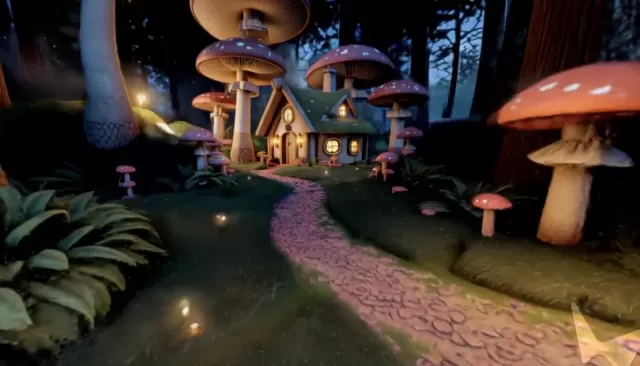
The landscape of AI-driven content creation is advancing into three dimensions with the commercial debut of a pioneering world model. Developed by World Labs, a startup founded by AI visionary Fei-Fei Li, the new platform named Marble allows users to transform various inputs into fully editable and downloadable 3D environments.
This launch positions the company ahead of several competitors who are still in research preview or demo phases. Unlike other models that generate transient worlds in real-time, Marble specializes in creating persistent, exportable 3D spaces. This approach minimizes visual inconsistencies and allows for outputs like Gaussian splats, meshes, and video files, providing a stable foundation for professional projects.
Core Capabilities And Creative Control
Marble distinguishes itself through a strong emphasis on user-directed creation. It accepts a flexible range of inputs including text prompts, photographs, video clips, 3D layouts, and panoramas. A significant upgrade from its beta version is the ability to process multiple images or short videos, enabling the generation of more accurate digital twins of real-world spaces.
Central to its design philosophy is providing creators with granular control, preventing the AI from entirely dictating the creative process. The platform introduces a hybrid 3D editor and unique AI-native tools to facilitate this.
- Chisel Editor: This experimental tool lets users block out basic spatial structures—such as walls and platforms—using simple 3D shapes. Artists can then apply text prompts to define the visual style, effectively separating a scene's geometry from its aesthetics. This direct manipulation allows for intuitive editing, like moving a block representing a couch to a new location.
- World Expansion: After generating an initial environment, users can command the model to expand the world in areas where detail begins to fade, effectively growing the scene on demand.
- Composer Mode: For constructing extensive landscapes, users can seamlessly stitch together multiple individually generated worlds into a single, larger space.
Practical Applications Across Industries
The platform is offered through a tiered subscription model, from a free plan to professional tiers that include commercial rights. Initial primary use cases are focused on several content-hungry fields:
- Gaming: Developers can use Marble to rapidly prototype and generate ambient background environments or architectural assets. These 3D objects can then be exported into standard game engines like Unity or Unreal, where interactive elements and game logic are added. It serves as an asset creation tool rather than a full pipeline replacement.
- Visual Effects: For film and VFX, the platform offers a solution to the camera control and consistency challenges found in AI video generators. Artists can stage scenes within a coherent 3D space and achieve precise, frame-perfect camera movements.
- Virtual Reality: With native compatibility for leading VR headsets, every generated world is immediately explorable in virtual reality, offering a potential solution for the industry's high demand for immersive content.
- Robotics & Simulation: The technology also holds promise for robotics, where simulated training data is scarce. By generating diverse and complex 3D environments, it can aid in creating robust training simulations for autonomous systems.
The Path Toward Spatial Intelligence
The release of Marble is framed as a foundational step toward a broader ambition: endowing machines with genuine spatial intelligence. World Labs' leadership draws a parallel to large language models, which taught machines to process language. Similarly, advanced world models could teach machines to perceive, understand, and interact with three-dimensional spaces.
This capability extends beyond entertainment and automation. The long-term vision suggests that spatial understanding could lead to breakthroughs in scientific research and medical fields, where comprehending complex structures and interactions is paramount. The goal is to build AI that doesn't just analyze data, but intuitively understands the world it occupies.