Middle-earth Gaming: A History of Hits and Misses
Jul 29, 2025
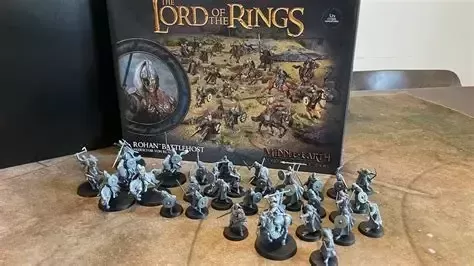
Every announcement of a new video game set in Middle-earth triggers a familiar cycle for fans: a spark of nostalgia and excitement, quickly extinguished by dread. While Tolkien's universe offers limitless lore and a dedicated fanbase ready to embrace almost any adaptation, the modern reality of Lord of the Rings gaming has been bleak.
Recent years have been defined by high-profile failures. From the heavily criticized adventure title Gollum and the underwhelming survival game Return to Moria, to the lukewarm reception of the cozy life-sim Tales of the Shire, the franchise has struggled to find its footing. However, long-time gamers know that this trend wasn't always the norm.
A Legacy of Quality Adaptations
While video game adaptations of Tolkien's works date back to 1982's The Hobbit, the medium truly flourished following the release of Peter Jackson's film trilogy in the early 2000s. Unlike many licensed tie-ins of that era, which were often rushed cash grabs, The Lord of the Rings boasted a catalog of genuinely solid titles.
Action Excellence: The hack-and-slash adaptations of The Two Towers and The Return of the King were both mechanically satisfying and faithful to the cinematic experience.
MMO Longevity: The Lord of the Rings Online successfully maintained a dedicated community for over a decade.
RPG Depth: The Lord of the Rings: The Third Age stands out as a cult classic, successfully blending the franchise's lore with turn-based mechanics reminiscent of Final Fantasy.
This era of consistency reached its zenith in the mid-2010s with the release of Middle-earth: Shadow of Mordor and its sequel, Shadow of War.
The Innovation of the Nemesis System
Released in 2014 by WB Games and Monolith Productions, Shadow of Mordor is widely regarded as the pinnacle of Tolkien-based gaming. It succeeded by offering more than just a compelling narrative and polished third-person combat; it introduced a revolutionary mechanic known as the Nemesis System.
This system transformed enemy encounters from generic battles into personalized narratives. The Uruk enemies were not merely cannon fodder; they possessed distinct names, personalities, and memories.
Grudges and Memory: Enemies would remember previous encounters. If an Uruk killed the player, they would be promoted and might taunt the player during the next fight.
Dynamic Hierarchies: Defeated enemies could cheat death and return stronger, seeking revenge.
Strategic Manipulation: Players could dominate Uruks, using them as spies or bodyguards to dismantle the enemy army from within.
This innovation created a living, breathing ecosystem of adversaries, setting a high bar that subsequent games have failed to clear.
The Modern Decline: Gollum and The Shire
The momentum generated by the Shadow series ground to a halt with the announcement and subsequent release of The Lord of the Rings: Gollum. Developed by Daedalic Entertainment, the game was intended to provide a unique narrative perspective. Instead, it launched in 2023 to disastrous reviews citing game-breaking bugs, dated graphics, and poor design. The failure was catastrophic enough to shutter the studio shortly after launch.
Currently, Tales of the Shire faces a similar trajectory. Despite being produced by the gaming division of Weta Workshop—the very studio responsible for the visual magic of the film trilogy—the game has been met with mixed responses. Players have critiqued its flat art style, shallow gameplay loops, and uninspired environments. It is a baffling outcome for a studio that arguably understands the visual language of Middle-earth better than anyone else.
The Core Issue: Studio Mismanagement
Why do these projects keep missing the mark? Reports regarding the development of both Tales of the Shire and Gollum point to a systemic issue within the industry: mismanagement.
Interviews with developers suggest that the problem isn't a lack of passion or talent, but rather a toxic combination of corporate obstacles:
Unrealistic Deadlines: Teams are often forced to crunch to meet release dates that don't allow for polish.
Resource Scarcity: Funding issues often hamstring development mid-production.
Scope Creep and Interference: Constant changes in creative direction from leadership lead to confusion and low morale.
When developers are exhausted, worried about layoffs, and restricted by impossible mandates, the final product suffers. The freedom and trust required to innovate—as seen with the creation of the Nemesis System—are absent in these high-pressure environments.
Future Projects on the Horizon
Despite the recent string of disappointments, the industry is not abandoning Middle-earth. Weta Workshop's gaming division is reportedly developing a new title code-named "Groundhog." This project is described as a roguelike that draws mechanical inspiration from heavy hitters like Baldur's Gate and Diablo.
Simultaneously, Amazon is in the early stages of developing a new Lord of the Rings MMO. While the company has been aggressively expanding its gaming footprint, they have admitted to searching for the right "hook" to make the project stand out.
Whether these future titles can break the curse of mediocrity remains to be seen. For now, the fanbase remains cautious, hoping for a return to quality but prepared for further disappointment.